TL;DR

Get kitchen gear delivered free with Prime
- Fast, free delivery on millions of items
- Prime Video, Amazon Music and more included
- Member-only deals all year
Hunker describes a DIY table runner made by sewing vintage handkerchiefs together, based on a project shared by Instagram creator Chickie Wu. The look depends on the fabrics selected, and the report recommends checking their condition and washing them gently before sewing.
Hunker has reported on a DIY table runner made from vintage handkerchiefs, after Instagram creator Chickie Wu shared a project using thrifted pieces sewn together. The idea offers a way to reuse fabric accessories as a table decoration, with the final appearance shaped by the patterns and condition of the handkerchiefs.
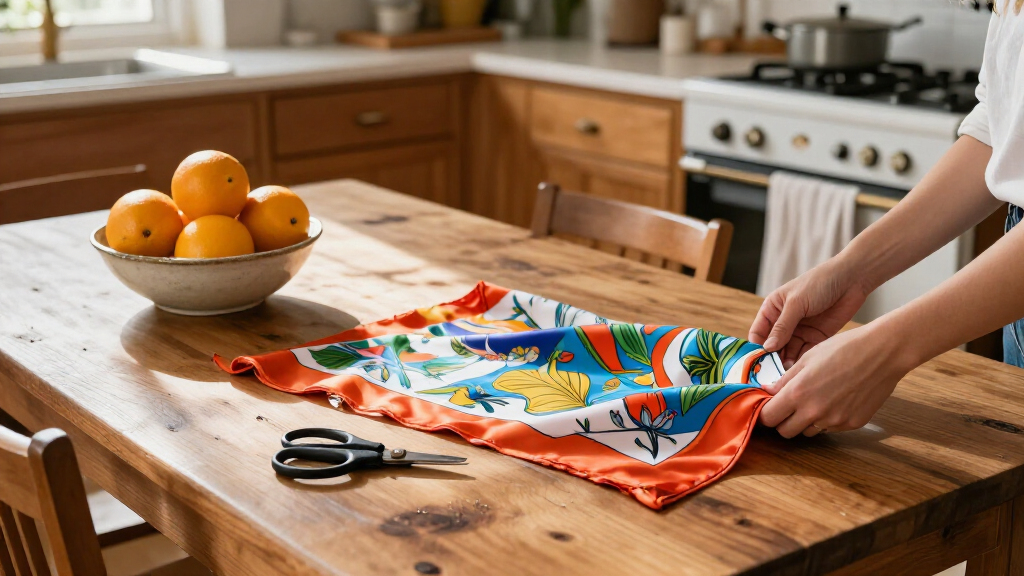
According to Hunker, Wu found an assortment of vintage handkerchiefs at a local thrift store and joined them by sewing. The resulting runner can be customized through the choice of fabrics: matching patterns can create a more coordinated appearance, while varied colors and prints can give it a deliberately mismatched look. The report describes the result as fitting cottagecore or farmhouse-inspired decor, though those style labels are aesthetic descriptions rather than measured outcomes.
The report advises looking for handkerchiefs in good enough condition to sew and withstand washing. It suggests measuring the table or other surface before shopping to estimate how many pieces will be needed. Once collected, Hunker recommends washing older fabric in cold water with a hand-wash setting and a phosphate-free detergent, then allowing it to dry before sewing.
To assemble the runner, the handkerchiefs are lined up end to end and joined along their edges with an invisible seam stitch. Hunker recommends using a sharp needle, saying a dull one can damage older fabric. If the pieces vary in size, they can be left uneven for a more eclectic shape or wider ones can be hemmed to create a more uniform runner. The report also suggests combining vintage and contemporary fabrics or mixing styles, such as lace and paisley.
A Second Use for Vintage Fabric
The project gives readers a practical way to reuse thrifted textiles as home decor, rather than buying a new runner. It also leaves room to adapt the finished piece to a particular table: the maker can choose the length, fabric mix, and whether the edges look uniform or varied. Hunker presents this as a relatively simple sewing project, but the result depends on finding suitable cloth and joining it securely.
For people with delicate or damaged handkerchiefs, the condition check matters. Older fabrics may not tolerate washing or stitching equally well, and the source does not say that every vintage piece will be appropriate. The project is best understood as an option for fabrics that can handle the care and sewing involved.
As an affiliate, we earn on qualifying purchases.
How the Runner Comes Together
Hunker frames the handkerchief project as an alternative to purchasing a table runner. It notes that runners can dress a table without covering its full surface and can be used alongside placemats. The article also mentions a separate DIY idea using eucalyptus leaves, but its focus here is on connecting fabric pieces into a reusable decoration.
The source describes a project shared by Chickie Wu on social media and says she used handkerchiefs found at a local thrift store. It also points to Etsy as another possible place to look for groups of pieces in complementary patterns. It provides no price comparison, measured project time, or independent assessment of the finished runner’s durability.
“Make sure that even if they’re vintage, the fabric isn’t too delicate to be sewn together.”
— Hunker
As an affiliate, we earn on qualifying purchases.
Fabric Durability Varies
Hunker does not provide details about the handkerchiefs Wu used, the finished runner’s dimensions, or how well it held up after repeated washing. It is also unclear whether Wu shared a full step-by-step tutorial beyond explaining the project on social media. Readers will need to judge the strength and care needs of their own fabrics before sewing them together.
As an affiliate, we earn on qualifying purchases.
Choose Pieces Before Sewing
Anyone following the method can start by measuring the surface they want to cover, then sourcing enough handkerchiefs in suitable condition. After checking care labels where available and washing the pieces gently, they can lay them out to test the pattern and length before stitching. The source gives no announced follow-up from Wu or Hunker, so any additional instructions or updates remain unknown.
As an affiliate, we earn on qualifying purchases.
Key Questions
What is the DIY project?
It is a table runner made by sewing vintage handkerchiefs together. Hunker reports that Instagram creator Chickie Wu shared a version made with thrifted pieces.
How are the handkerchiefs joined?
The report says to line the pieces up end to end and sew along their edges using an invisible seam stitch. It advises using a sharp needle to reduce the risk of damaging older fabric.
How many handkerchiefs are needed?
The number depends on the surface and the size of the fabric pieces. Hunker recommends measuring the table first to estimate how many handkerchiefs will cover the desired length.
How should vintage handkerchiefs be washed first?
Hunker suggests cold water and a hand-wash setting, with a phosphate-free detergent, followed by drying before sewing. The source cautions that fabric condition and delicacy vary.
Source: rss
Columbus Day / Indigenous Peoples' Day Picks
long weekend sales
As an affiliate, we earn on qualifying purchases.