To protect your Wi-Fi appliances in your smart kitchen, start by securing your Wi-Fi network with strong, unique passwords and enable WPA3 encryption. Set up a separate network just for your smart devices, disable unnecessary features, and keep all firmware and software updated regularly. Monitor device activity for unusual behavior and educate everyone in your household about security best practices. Continuing to explore these strategies will help you stay ahead of potential hacks and safeguard your privacy.

Get kitchen gear delivered free with Prime
- Fast, free delivery on millions of items
- Prime Video, Amazon Music and more included
- Member-only deals all year
Key Takeaways
- Use strong, unique passwords and enable WPA3 encryption on your Wi-Fi to secure communication with smart kitchen appliances.
- Create separate, guest networks for smart devices to isolate them from your main devices and reduce security risks.
- Regularly update firmware and device software to patch vulnerabilities and improve security features.
- Disable unnecessary features like remote access and cloud sync to minimize potential attack points.
- Choose appliances with built-in security features and support for current standards to enhance protection against hacking.
Wi-Fi smart appliance security kit
As an affiliate, we earn on qualifying purchases.
As an affiliate, we earn on qualifying purchases.
Understanding the Risks of Connected Kitchen Devices
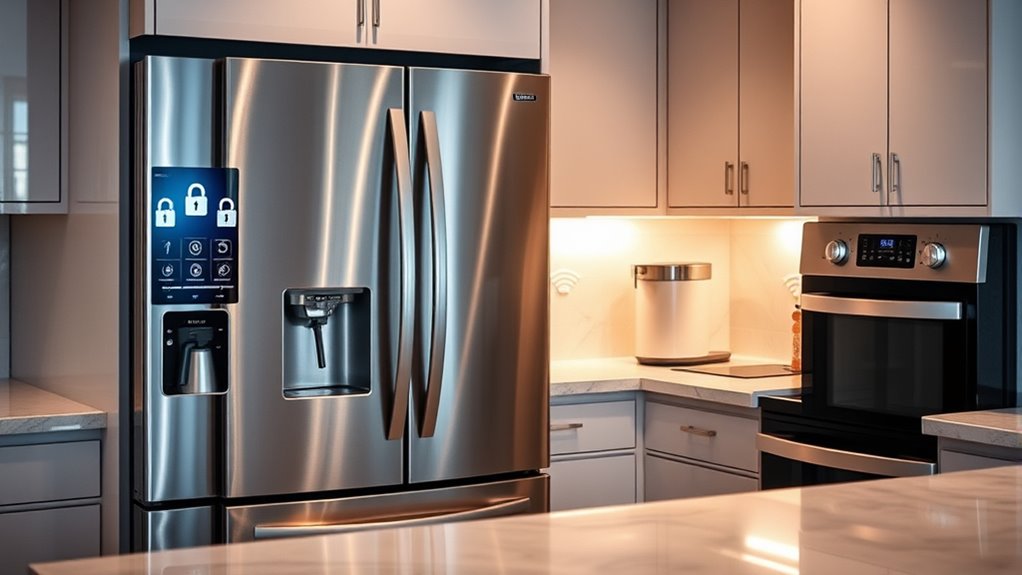
As more kitchen devices become connected to the internet, it’s important to recognize the potential security risks they pose. These devices often collect data about your habits, preferences, and daily routines, raising privacy concerns. Manufacturers may gather information to improve features or for targeted advertising, but this data can be vulnerable if not properly protected. Hackers could exploit vulnerabilities to access personal information or even control your appliances remotely. Understanding these risks helps you stay vigilant about what data is being collected and how it’s stored. Being aware of privacy concerns encourages you to scrutinize device permissions and choose trusted brands. Additionally, the technology used in these devices, such as the integration of home automation systems, can influence their susceptibility to hacking. The use of encryption protocols is crucial for safeguarding data transmitted between your devices and networks. Implementing security best practices can significantly reduce the chance of unauthorized access. Regularly updating your device firmware is another essential security measure to patch known vulnerabilities. Ultimately, knowing the potential for data collection and privacy issues allows you to make informed decisions about integrating connected devices into your kitchen.
WPA3 compatible router with guest network
As an affiliate, we earn on qualifying purchases.
As an affiliate, we earn on qualifying purchases.
Securing Your Wi-Fi Network Before Adding Appliances
Securing your Wi-Fi network before adding smart appliances is essential to protect your privacy and prevent unauthorized access. Start by enabling network segmentation, creating a separate network for your smart devices. This keeps potential breaches isolated from your main devices and personal data. Use strong, unique passwords and activate device authentication to verify each device’s identity during connection. This extra layer prevents unauthorized devices from joining your network. Here’s a quick guide:
| Step | Action |
|---|---|
| Change default passwords | Use complex, unique passwords for routers |
| Enable WPA3 encryption | Ensure your Wi-Fi is secure with latest standards |
| Create guest network | Isolate smart appliances from main network |
| Enable device authentication | Verify devices before allowing access |
| Regular updates | Keep firmware and security settings current |
Implementing these steps fortifies your Wi-Fi before adding appliances. Additionally, understanding Youngster Choice can help you choose the most secure smart devices for your home. To enhance your security, consider network monitoring tools that can alert you to suspicious activity on your network. Regularly reviewing your security settings can also help identify potential vulnerabilities and ensure ongoing protection. Moreover, staying informed about vetted security practices ensures that your smart home remains resilient against emerging threats. Being aware of cybersecurity threats relevant to smart devices can further strengthen your defenses.
smart home device firmware update tool
As an affiliate, we earn on qualifying purchases.
As an affiliate, we earn on qualifying purchases.
Choosing Devices With Strong Security Features
When selecting smart kitchen devices, make sure they follow up-to-date security protocol standards to protect your network. Check if the devices receive regular firmware updates, as these often patch security vulnerabilities. Prioritizing these features helps keep your smart kitchen safe from potential threats. Additionally, consider devices that incorporate local automation capabilities, reducing reliance on cloud services and minimizing exposure to external security breaches. Implementing network segmentation can further isolate your smart appliances from other home devices, adding an extra layer of security. Ensuring the use of security cookies can further safeguard your device interactions and maintain your privacy. Employing firmware verification methods can also help verify the integrity of device updates and prevent malicious modifications. Incorporating best security practices can also help in defending against hacking attempts and unauthorized access.
Security Protocol Standards
Choosing kitchen security devices with strong security features is essential to protect your smart appliances from cyber threats. Focus on devices that support robust security protocol standards, such as WPA3 for Wi-Fi connections. These standards utilize advanced encryption standards to secure data transmission, making it harder for hackers to intercept or decode information. Additionally, look for devices that implement strong authentication protocols, ensuring only authorized users can access your appliances. Secure authentication methods like WPA3’s SAE (Simultaneous Authentication of Equals) provide enhanced protection against brute-force attacks. By selecting devices that adhere to current security protocol standards, you considerably reduce vulnerabilities, safeguarding your smart kitchen from unauthorized access and potential cyber threats. Always verify that your devices follow the latest security protocols before making a purchase. Navigation and mapping features in some devices can also help detect suspicious activity and unauthorized access attempts, further strengthening your security. Incorporating security protocol standards into your device selection process is vital for comprehensive protection against cyber intrusions. Staying informed about emerging cybersecurity threats can help you adapt your security measures proactively. Regular firmware updates and device security settings are also crucial to maintain optimal protection. Additionally, choosing devices with built-in security features can provide an extra layer of defense against potential breaches.
Regular Firmware Updates
Have you considered how regularly updating your smart kitchen devices can strengthen their security? Firmware maintenance is essential to patch vulnerabilities and improve performance. When choosing devices, check their update schedules—devices with consistent firmware updates are less likely to be exploited. Manufacturers that prioritize security release patches promptly, reducing the risk of hacking. Regular firmware updates ensure your appliances stay protected against emerging threats and bugs. It’s wise to select products that support automatic updates or provide easy manual update options. Staying current with firmware not only enhances security but also improve device performance and user experience. Additionally, choosing devices with strong security features can provide extra protection against cyber threats. Making firmware maintenance a routine part of your smart kitchen management, and always verify that your devices receive timely updates to keep your connected appliances safe from cyber threats.
Moreover, understanding the importance of security protocols helps ensure your network remains protected while using smart devices.
network monitoring tools for smart home
As an affiliate, we earn on qualifying purchases.
As an affiliate, we earn on qualifying purchases.
Updating Firmware and Software Regularly
Regularly updating the firmware and software on your smart kitchen devices is essential to keep them secure and functioning properly. Firmware updates fix vulnerabilities, improve performance, and add new features, reducing the risk of hacking. Software patches address security flaws that hackers might exploit. To stay protected, check for updates frequently through the device’s app or manufacturer’s website. Enable automatic updates if available, so you don’t miss critical patches. Ignoring updates leaves your devices vulnerable to malware and unauthorized access. Keeping firmware and software current guarantees your appliances operate smoothly and securely, minimizing potential security gaps. Make it a habit to stay updated, and your smart kitchen will be better protected against cyber threats.
Creating a Separate Network for Smart Devices
Creating a separate network for your smart kitchen devices is a proactive way to enhance your home’s security. By setting up device segmentation, you keep your smart appliances isolated from your main network, reducing the risk if a device is compromised. This way, even if a smart fridge or speaker is hacked, hackers won’t gain access to your personal data or other connected devices. Consider creating a guest access network specifically for visitors, preventing them from accessing your smart kitchen appliances. This approach not only limits potential vulnerabilities but also gives you better control over who can connect to your smart devices. Segregating your networks is a simple yet effective step to protect your smart kitchen from cyber threats.
Using Strong, Unique Passwords for Each Device

Using strong, unique passwords for each device keeps your smart kitchen safer by preventing breaches if one account is compromised. Reusing common codes makes it easier for hackers to access multiple devices at once. Always create different, complex passwords to protect your smart home effectively.
Unique Passwords Prevent Breaches
Since shared or reused passwords can leave your smart kitchen vulnerable, it’s essential to assign each device a strong, unique password. Using distinct passwords enhances password management by reducing the risk of a single breach compromising multiple devices. Unique passwords prevent breaches from spreading across your network, so even if one device is compromised, others stay protected. Avoid using common or easily guessable codes; instead, create complex combinations with a mix of letters, numbers, and symbols. Regularly updating passwords further strengthens your security. By dedicating time to this practice, you ensure each appliance remains secure, and your overall smart kitchen system stays resilient against hacking attempts. Strong, unique passwords are your first line of defense in breach prevention.
Avoid Reusing Common Codes
Reusing common codes across your smart kitchen devices can considerably weaken your security, making it easier for hackers to gain access. Password reuse leaves all your devices vulnerable if one gets compromised. Many devices come with default credentials, which are widely known and easily exploited. Always change default credentials immediately and avoid using the same password for multiple devices. Instead, create strong, unique passwords for each appliance. This practice prevents a single breach from cascading to other devices, safeguarding your entire smart kitchen. Using different, complex passwords also thwarts brute-force attacks. Remember, hackers often target default credentials because they’re predictable. By avoiding password reuse and updating default credentials, you significantly enhance your smart kitchen’s security, keeping your appliances and personal data safe from potential hacks.
Enabling Encryption and Other Security Protocols

Implementing encryption and other security protocols is essential to protect your smart kitchen devices from unauthorized access and data breaches. Start by enabling strong encryption protocols like WPA3 on your Wi-Fi network, which meets current security standards. These protocols encrypt data transmitted between your appliances and your router, making it difficult for hackers to intercept sensitive information. Make certain your devices support and are configured to use the latest encryption standards. Avoid outdated protocols such as WEP or WPA, as they’re vulnerable to attacks. Regularly update your device firmware and router software to maintain security. By following these steps, you strengthen your smart kitchen’s defenses, reducing the risk of hacking and keeping your connected appliances safe.
Disabling Unnecessary Features and Services
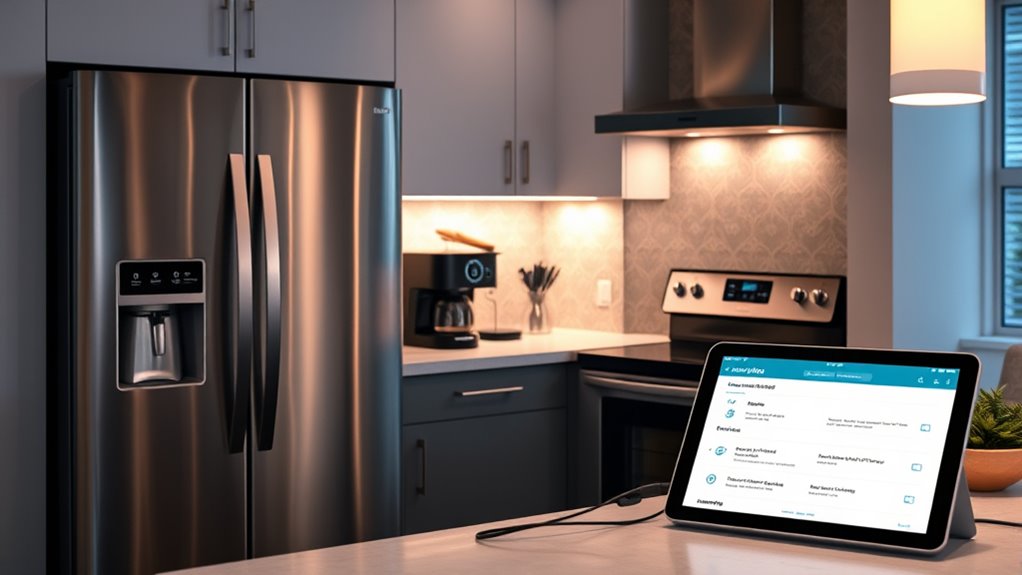
After securing your network with strong encryption protocols, it’s important to review your smart kitchen devices for any unnecessary features or services they might have enabled by default. Disabling unnecessary features helps reduce potential attack points and enhances overall security. Turn off unused services like remote access, UPnP, or cloud sync if you don’t need them. Check device settings or admin panels for options to disable these functions. Many devices come with features that aren’t essential for daily use but could be exploited by hackers. By turning off unused services and disabling unnecessary features, you minimize vulnerabilities and make it harder for cybercriminals to access your appliances. Regularly review device configurations to keep your smart kitchen secure and ensure only necessary functionalities are active.
Monitoring Device Activity for Unusual Behavior
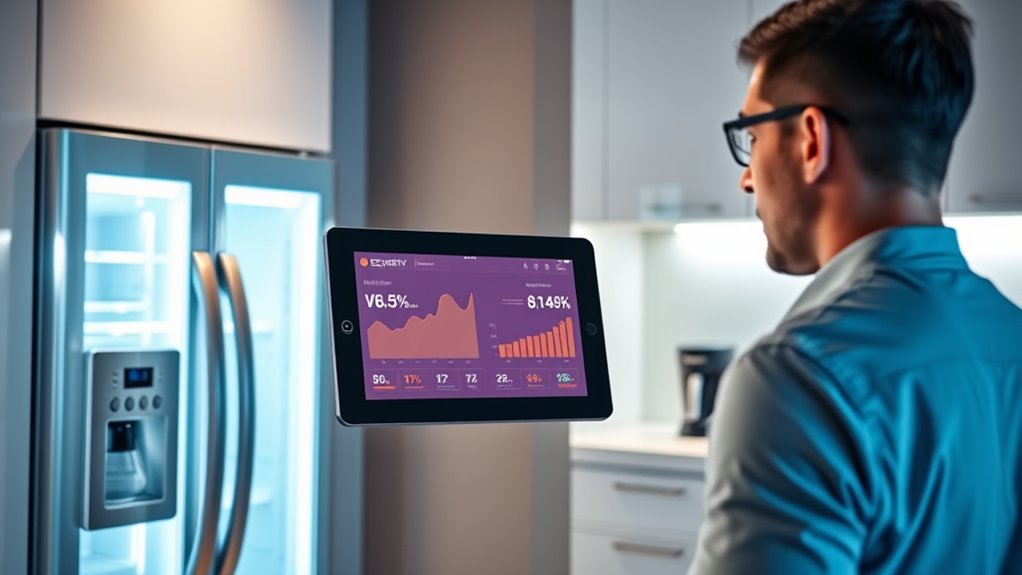
Monitoring your smart kitchen devices for unusual activity is essential to maintaining security. Regular activity monitoring helps you spot potential threats early, while device anomaly detection pinpoints irregular behavior that could indicate hacking or malware. Keep an eye on network traffic and device logs to identify any unexpected connections or data transfers. Use security tools or your router’s built-in features to set up alerts for unusual activity. If a device suddenly starts communicating with unfamiliar IP addresses or transmits large amounts of data, it’s a sign to investigate further. Staying vigilant with activity monitoring ensures you catch potential breaches before they escalate, keeping your smart kitchen safe and secure from cyber threats.
Educating Household Members About Smart Device Security
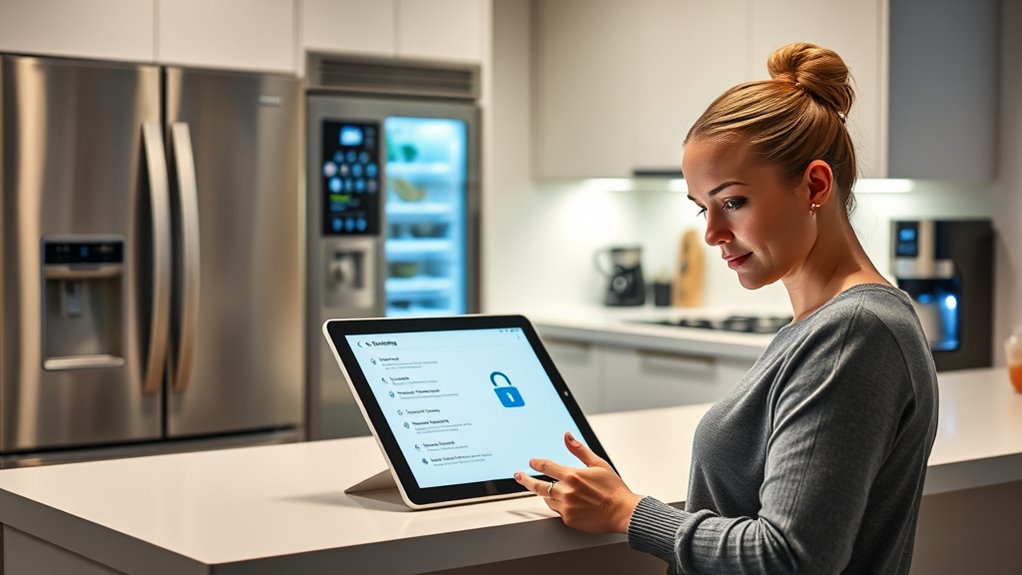
Educating everyone in your household about smart device security is essential because human error often poses the biggest risk. When household members understand smart device etiquette, such as avoiding suspicious links or unauthorized app downloads, they help prevent vulnerabilities. Promoting household cybersecurity awareness ensures everyone knows the importance of strong, unique passwords and regular updates. Make it clear that smart appliances are part of your overall security, and everyone should follow best practices like disconnecting devices when not in use. Encourage open communication about potential issues or suspicious activity. By empowering household members with knowledge, you reduce the chance of accidental breaches and create a safer smart kitchen environment for all. Your proactive education reinforces security and minimizes human-related risks.
Frequently Asked Questions
How Do I Recognize if a Smart Kitchen Device Has Been Hacked?
If your smart kitchen device has been hacked, you’ll notice unusual behavior like unexpected resets or commands. Check for firmware updates, as outdated software can be a vulnerability. Also, monitor your network for unusual activity and consider network segmentation to isolate smart devices. Regularly updating firmware and segmenting your network help prevent hacking, making it easier to spot and respond to suspicious activity quickly.
What Are the Signs of Compromised Smart Appliances?
When your smart appliances act up unexpectedly, it’s a red flag. Look out for unusual behavior like strange noises, unexplained app activity, or devices turning on/off randomly. Regular device firmware updates and smart appliance diagnostics can help spot vulnerabilities early. If you notice these signs, your device might be compromised. Stay vigilant—think of it as your kitchen’s way of waving a red flag before things get out of hand.
Can I Remotely Disable a Compromised Device?
Yes, you can remotely disable a compromised device. Many smart appliances support remote device control through their app or security platform, allowing you to disconnect or turn off the device instantly. To keep your appliances secure, regularly apply security patch updates, which fix vulnerabilities and prevent future hacks. If you suspect a compromise, deactivate the device immediately and update its firmware to ensure your smart kitchen stays protected.
Are There Specific Brands Known for Better Security?
Think of choosing a smart appliance brand as picking a knight for your digital castle. Brands like Samsung, LG, and Bosch often boast strong brand reputation, backed by rigorous security certifications. These companies prioritize security updates and user privacy, making them better shields against hacks. Always check for recent security certifications and reviews, because a trusted brand is your best ally in keeping your smart kitchen safe and sound.
How Often Should I Change My Device Passwords?
You should change your device passwords regularly, ideally every three to six months, to maintain strong security. Incorporate password rotation as part of your routine, and always update your passwords after security updates or if you suspect a breach. Doing so minimizes risks and keeps your Wi-Fi appliances safer from potential hacks. Regularly reviewing and updating passwords is a simple yet effective way to strengthen your smart kitchen security.
Conclusion
By taking these security steps, you’re not just protecting your smart kitchen appliances—you’re trusting in the idea that security is an ongoing process, not a one-time fix. Remember, even the most advanced devices are only as secure as the habits you develop. Think of it this way: if you treat your network like a fortress, you’re more likely to keep hackers out. In the end, proactive security safeguards your peace of mind and your home.
Halloween Picks
halloween
As an affiliate, we earn on qualifying purchases.