
TL;DR

Get kitchen gear delivered free with Prime
- Fast, free delivery on millions of items
- Prime Video, Amazon Music and more included
- Member-only deals all year
A Hunker report describes a DIY method for extending a downspout with a buried pipe, carrying roof runoff farther from the house while concealing most of the pipe. The approach can reduce visible puddles and soil wear, but it requires a downhill route, utility checks and a clear outlet; the report does not provide measured performance results.
A DIY design highlighted by Hunker extends a roof downspout with a pipe buried in a shallow yard trench, directing runoff farther from the house while keeping most of the extension out of sight. The method is intended to address puddles, bare patches and soil erosion near downspout outlets, though the report does not establish how well it performs across different properties.
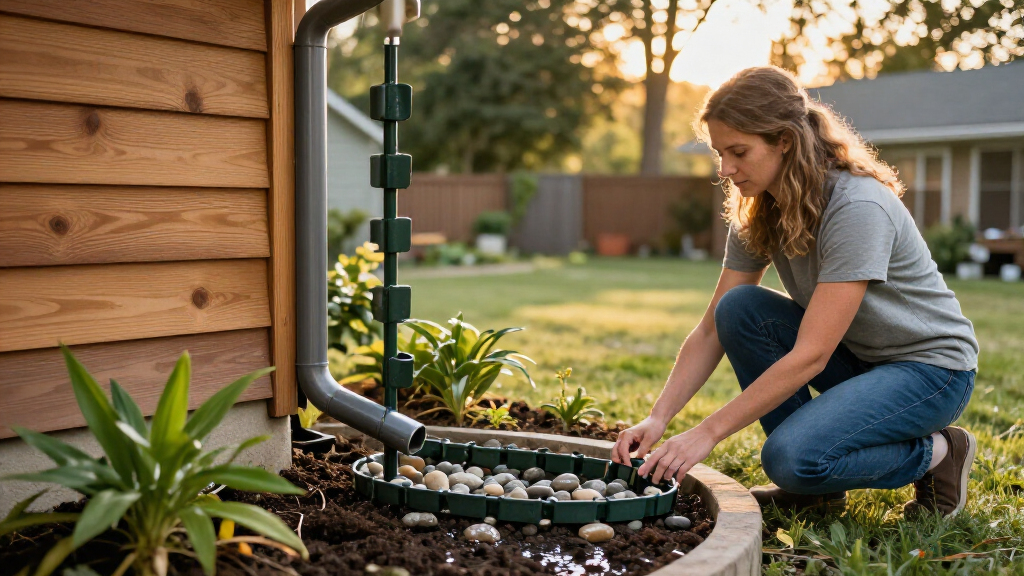
The method, described in Hunker’s report, is based on a project by YouTuber Jesse Smith, who attached an extension pipe to a downspout and buried it. The pipe carries water away from the point where it would otherwise discharge onto the ground. The visible end remains exposed so water can flow out, while the buried section is concealed beneath the lawn.
Suggested supplies include a durable corrugated or PVC pipe roughly comparable in size to the downspout, waterproof tape or PVC glue, and a shovel. A downspout adapter can make the connection easier; the report recommends considering an adapter with a cleanout opening to support maintenance. The outlet may be left open or fitted with a grate or pop-up drain.
Before digging, the route and depth need to be planned, including the height difference from the downspout to the buried pipe. Hunker advises checking for underground utilities and says the pipe must run downhill for water to flow. If the yard is nearly flat, creating a slope may require additional planning. The outlet must remain clear, and the disturbed lawn may need reseeding or other landscaping after the trench is filled.
Moving Runoff Beyond the Downspout
The design addresses both an appearance issue and a practical one: a downspout extension can be less visible when buried, while moving the outlet farther away may limit repeated water discharge at one spot. According to Hunker, concentrated runoff can wear away soil and contribute to erosion. The report also mentions possible foundation or structural concerns, but it does not document a particular case or quantify the risk.
For homeowners, the central consideration is not simply hiding the pipe. Its route and outlet determine where roof water goes. A concealed line that cannot drain properly, or that releases water in an unsuitable location, may fail to solve the underlying problem. The report’s instructions emphasize a downhill run and an exposed outlet, but they do not specify a universally suitable distance or installation design for every property.
As an affiliate, we earn on qualifying purchases.
Why Downspout Outlets Wear Soil
Downspouts collect water from the roof and discharge it at ground level. When water repeatedly lands in the same place, it can leave puddles or wash away soil and grass, producing the bare or muddy patch that the DIY is intended to address. Extending the discharge point changes where that water reaches the yard; burying the extension hides most of the added pipe.
The report presents this as a homeowner project rather than a tested drainage system. It does not supply engineering measurements, comparative tests or evidence that the approach prevents foundation damage. The condition of the yard, the slope of the route and the intended discharge location all affect whether the design is appropriate.
“He attached a pipe to the end of his downspout to carry the water further away, then hid the extra pipe by burying it.”
— Hunker, describing the DIY project by YouTuber Jesse Smith
As an affiliate, we earn on qualifying purchases.
Site Conditions Shape the Result
The source does not say how far the pipe should carry water, what slope is required, or which outlet location is suitable for a particular home. It also provides no performance measurements, long-term maintenance findings or comparison with other drainage options. The report warns that regrading a flat lawn can be technically demanding and advises researching it before starting.
It is also unclear whether local rules, soil conditions or property-specific drainage concerns would affect an installation. The report advises checking for utilities before excavation but does not give a complete installation specification. Readers should not treat the described project as proof that every puddle or foundation concern will be resolved by burying an extension.
As an affiliate, we earn on qualifying purchases.
Plan the Route Before Digging
For anyone considering the project, the immediate next steps are to clean the downspout, measure the proposed route and confirm underground utility locations before excavation. The planned pipe must have a downhill path and a suitable outlet that remains open to discharge water. Hunker advises preparing to restore the lawn after digging, using salvaged turf where possible or reseeding the disturbed area.
Homeowners whose yards are flat, whose drainage problems persist or who are unsure where runoff should go may need site-specific advice before changing the grade or installing a buried line. The source does not report a follow-up assessment of Smith’s project or set out a scheduled next development.
As an affiliate, we earn on qualifying purchases.
Key Questions
What does the buried downspout design do?
It connects a pipe to the downspout and buries most of the extension so roof runoff exits farther from the house, rather than directly beside the downspout.
What materials does the report suggest?
Hunker lists a durable corrugated or PVC pipe, waterproof tape or PVC glue, and a shovel. It also suggests that a downspout adapter, especially one with a cleanout opening, can make connection and maintenance easier.
Does the pipe need to slope?
Yes. The report says the pipe needs to run downhill for water to flow. A mostly flat yard may need grading, which Hunker describes as potentially technical.
What should be checked before digging?
Plan the route and depth, check for underground utilities, and decide where water will discharge. The outlet must remain exposed or otherwise clear for water to flow.
Does the DIY guarantee protection against foundation problems?
No. The report says concentrated runoff can contribute to erosion and mentions possible foundation or structural issues, but it offers no measurements or evidence that this method prevents such damage in every case.
Source: rss
Fall Picks
fall essentials
As an affiliate, we earn on qualifying purchases.